Fish bones and eyelash mites — medical tourism in China
Welcome to the first issue of my first newsletter!
Warning: for those squeamish about medical issues and bugs, some discussions and images may cause discomfort. If so, please skip ahead to the end, where I have a link to a Drum Tower podcast episode on medical tourism in China, which inspired this newsletter.
Fish bones, eyelash mites, and medical tourism in China
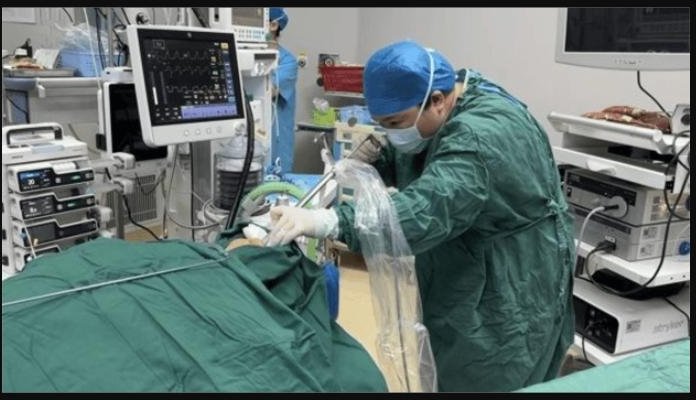
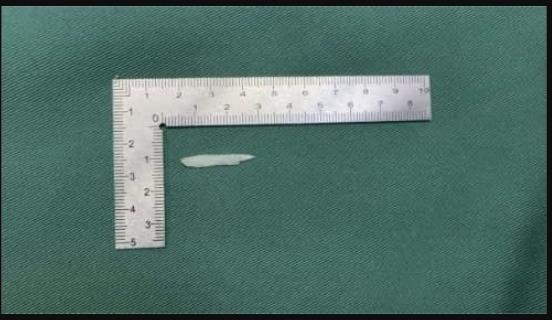
What should you do if it's 1:00 AM, you're feasting on carp soup, and a fishbone gets lodged in your throat and refuses to come out? If you're lucky enough to live in Wuhan, China, just go to the 24-hour Fishbone Extraction Clinic (取刺门诊), of course. The clinic is part of the ER at Hankou No. 6 Hospital. It's easy to find, thanks to a prominent sign featuring a full fish skeleton.
As it turns out, large hospitals in major Chinese cities usually have these specialized clinics. In a city with tens of millions of residents who love delicious, bone-in whole fish—especially freshwater varieties with many fine bones—stuck fishbones are an inevitable hazard. According to one report, the clinic saw 21 patients in just 15 hours.
I remember those little pin bones hidden deep within the delicate flesh. A clumsy child, I often ate too quickly and ended up with that "scratchy-yet-unscratchable" sensation. Back then, the remedy was to swallow a ball of rice to push the bone down or drink vinegar to soften it (neither of which is recommended, by the way). Miraculously, I never once had to go to the hospital. My grandmother, however, was not so fortunate a few years ago. The bone wouldn't budge; she developed an infection that eventually required surgery. But like every other adversity she faced over the course of a century, she survived it just fine.
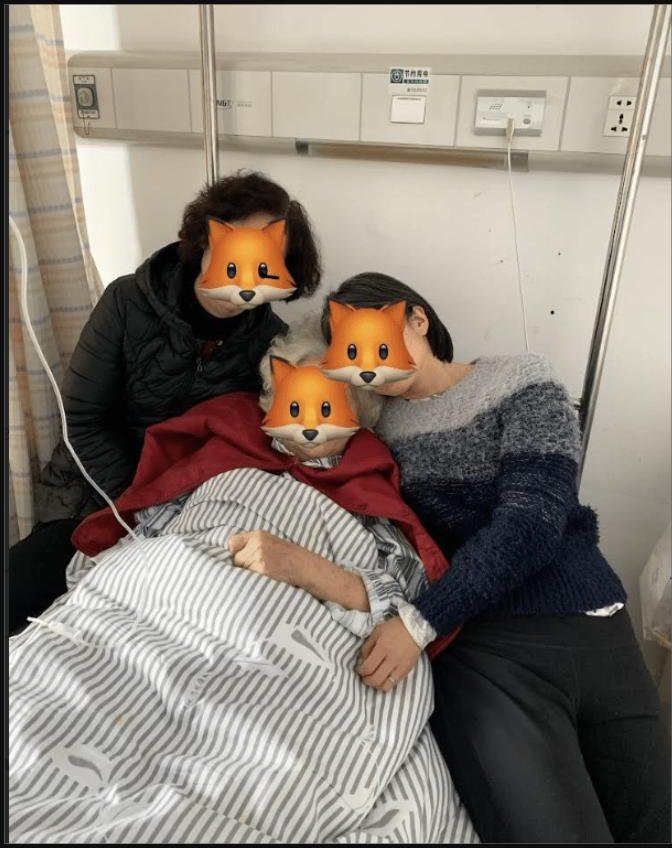
This brings back another memory from 2018, when my grandmother suffered a spinal fracture and I traveled to China to visit her in the hospital. Inpatients at Chinese public hospitals typically receive very little direct nursing care. Instead, a family member stays to handle tasks like assisting the patient to the bathroom at night, or the patient hires a nursing contractor (hugong, 护工) who oversees several patients on the floor. In the morning, the professional nurses arrive to perform light, almost symbolic tasks—like sweeping the beds with a small broom. These activities felt so performative that I actually found them endearing; in fact, the character Lili from my novel If You Don't Go was inspired by these young nurses.
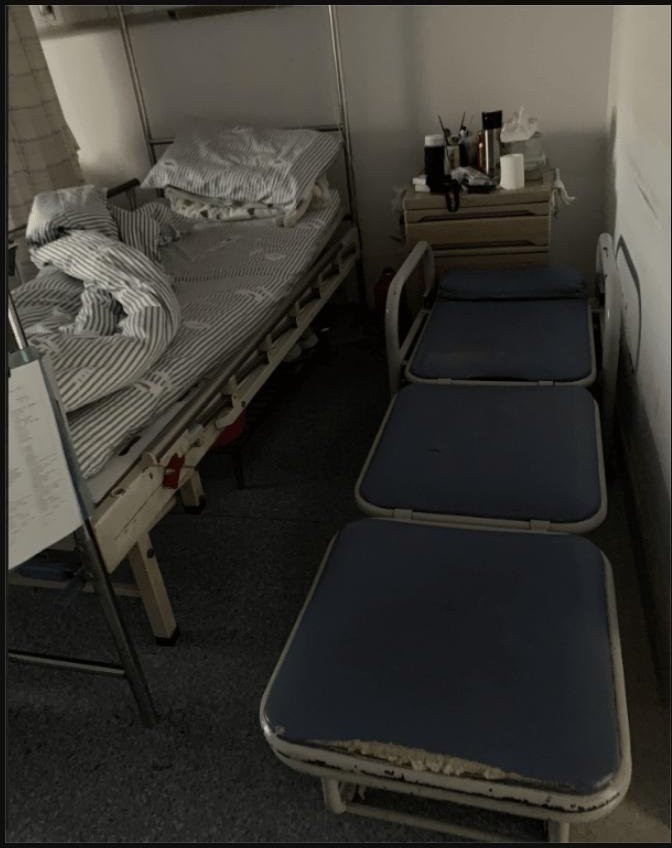
The diner next to the hospital wasn't very sanitary; by that night, "Mao's revenge" had set in. Luckily, I was at the right place. In the morning, I just wandered up to an internal medicine clinic on a different floor. Within thirty minutes, I had been seen by a doctor, paid a nominal fee, and grabbed my meds from the pharmacy downstairs.
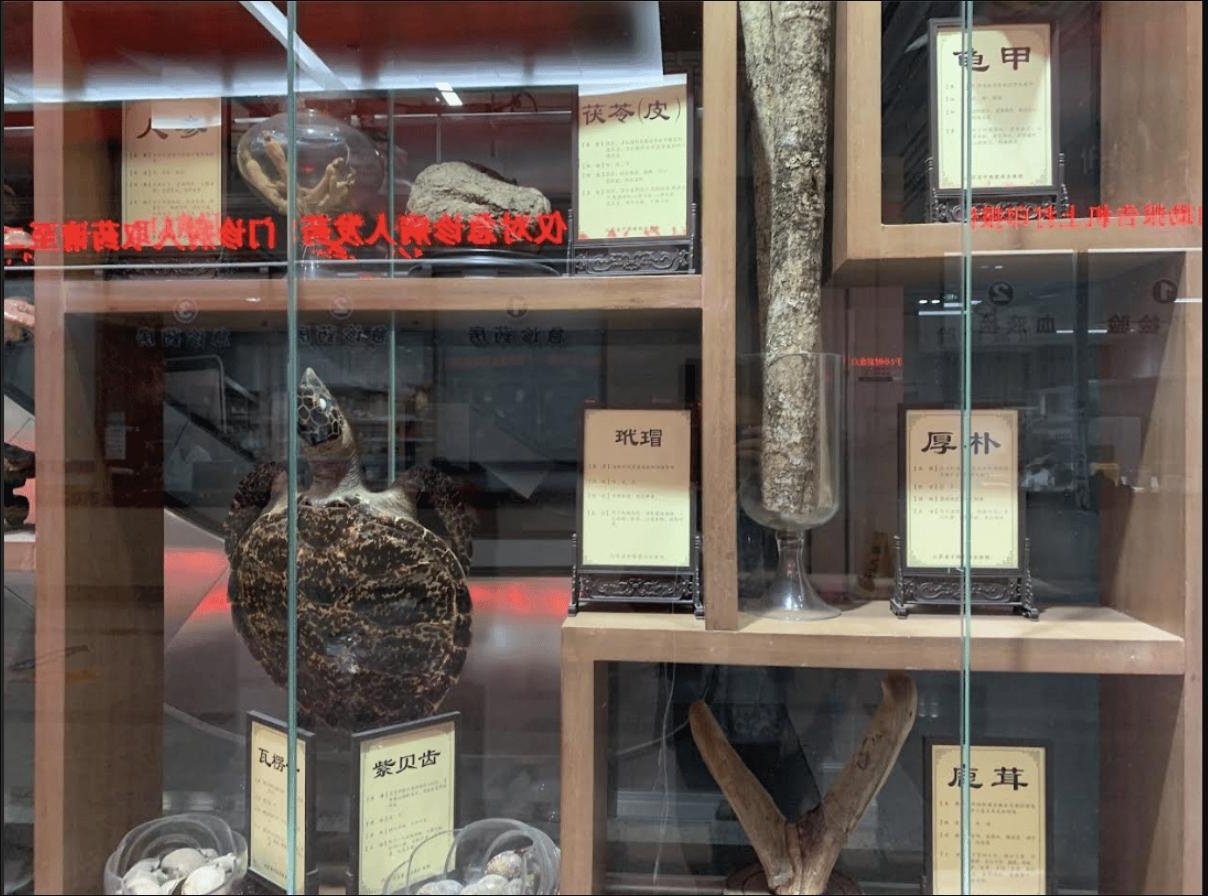
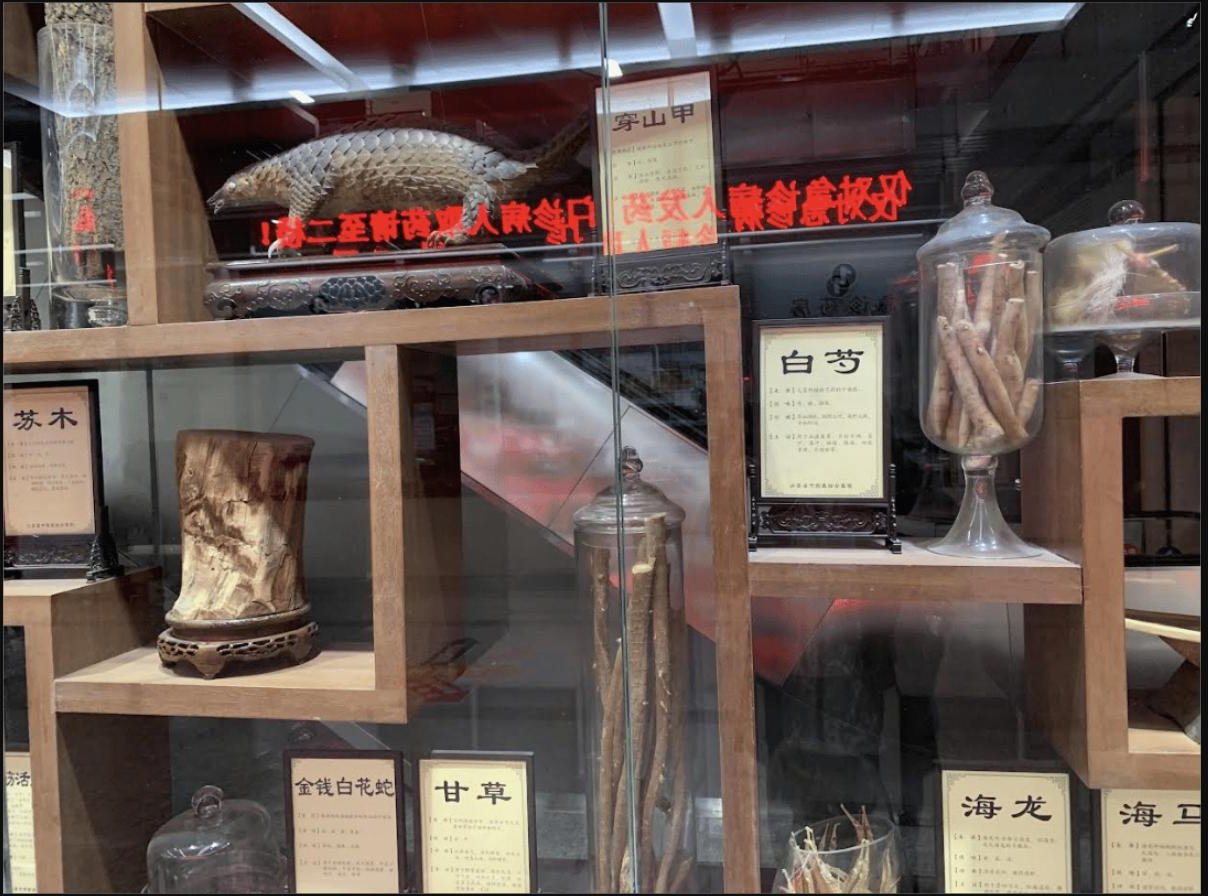
I've had my share of such experiences over the years—traveling means catching germs and becoming quite sick sometimes. But the Chinese hospitals are remarkably efficient at treating minor ailments at incredibly low costs. The most memorable experience was when my son was still a baby, once he had dislocated his elbow, as he was prone to getting Nursemaid's Elbow. Since it was after hours, my aunt drove us to the ER at the children's hospital. We waited no more than fifteen minutes. When we were called in, the doctor poked at my son's chubby cheek and said, "so cute!" Then he took his other hand off my son and turned to me: "Go pay."
"What?"
"It's done."
And it had cost less than twenty—I can't remember if it was yuan or dollars, but way cheaper than our previous ER visit for the same issue in the U.S.
When I travel, my left eye tends to become red and puffy. This time it happened again in Shanghai. I went to the Heping Eye Hospital using my favorite mode of transportation in China—a shared bike. I was sent to the dry eye clinic, where a doctor ran some tests and a nurse extracted one eyelash from each eyelid (ouch), and checked them using a diffraction grating microscope. Then she showed me photos like this:
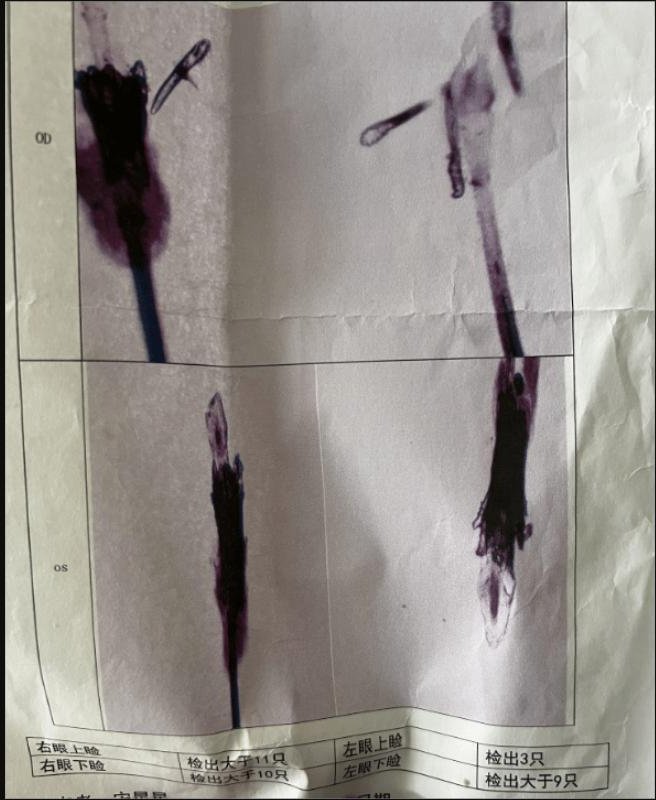
"What's this?"
"Eyelash mites. Everyone has them. They live off the oils produced by the glands around the eyes."
"🤯🤯🤯"
"Normally, people have 3-4 per eyelash. You have an extraordinary number, the most I've seen all day."
The nurse could hardly contain her excitement. She had stopped counting, and put greater than 9, 10, or 11 on the report. It was a wonder I could open my eyes.
So I was diagnosed with Demodex blepharitis. The underlying cause appeared to be slothfulness—I should change my pillow case more often and wash my eyelids more diligently. But to get rid of the mites for good, I needed OPT, which was a thermal treatment "invented in America". I would need at least three treatments at 800 yuan (over 100 dollars) a pop. For the first time, I found Chinese medicine more expensive than I would like, and realized that I was at a private hospital rather than a public one. But Dr. Zheng, a woman who somehow managed to be both very personable and no-nonsense, cut me a deal and knocked a few hundred yuan off. I was taken to a room where a nurse put a gel on my face, then flashbanged it with a wand. It stung a little bit. I was sure the mites had it much worse.
When I had trouble scheduling the next appointment, Dr. Zheng added me to her WeChat and personally took care of the scheduling. She would continue to send me personal greetings for major holidays as if she weren't a doctor but a real estate agent. I still don't know if the mites caused the redness, as Dr. Zheng told me that there was a "bubble" in my left eye about which nothing could be done.
A couple of weeks ago, on the Drum Tower podcast, there was an interesting episode on medical tourism in China that inspired this newsletter. The podcast requires a subscription, but I can do a few gift shares each month. This link should work five times total for all my readers until May 5 when it expires.
Some of the statistics mentioned were impressive: Last year, Chinese hospitals got nearly 1.3 million foreign patients. One projection for China's medical tourism market expects it to increase from $1.2 billion last year to $3.4 billion in the next decade. Based on GDP, China's health expenditure only takes up about 7%. For comparison, the UK spends about 11% and the U.S. spends close to 17%.
I'll be going to China again in June. Should I do a comprehensive physical exam and report back? Or would you prefer more stories, such as the time I watched an open heart surgery at a Tianjin hospital? Any other topic suggestion? Let me know!
Happy Chinamaxxing,
Diana Hongcha